


You shipped three features before lunch. Your agents wrote 2,000 lines across four worktrees. You feel productive. You also cannot remember what any of it does.
That "buzzing" sensation behind your eyes? Researchers just gave it a name: AI brain fry.
The Science Behind the Burnout
A BCG study of 1,488 U.S. workers found that developers and engineers who oversee AI tools intensively report 14% more mental effort and 12% more mental fatigue than those who do not. Workers managing simultaneous workflows across Cursor, Claude Code, Copilot, and Linear hit a productivity ceiling after just three tools, and beyond that threshold, output actually drops.
This is not traditional burnout. It is a distinct cognitive event. Burnout is emotional exhaustion from grinding work. AI brain fog is your prefrontal cortex hitting a wall because working memory, attention, and executive control have been maxed out by oversight, context switching, and information overload.
Engineers describe it as "mental static." One senior engineering manager in the study explained that he spent more energy managing the tools than solving the actual problem. Sound familiar?
Why Vibe Coding Fries Your Brain Faster
Agentic coding creates a dopamine feedback loop that mirrors a slot machine:
- You pull a lever with each prompt
- Get rapid rewards
- Chase the next payout
- Repeat until depletion
A LeadDev investigation found that developers using AI tools saw a 19.6% rise in after-hours code commits. Weekend productive hours surged 46% on Saturdays and 58% on Sundays.
The result is vibe-coding burnout: you are not tired from writing code. You are tired of managing the machines that write it. You lose your mental model of the project, accumulate what researchers call "cognitive debt," and end each day exhausted without understanding why.
AI coding burnout is the cost of infinite compute leverage with zero cognitive infrastructure. Your stack scales. Your runtime doesn't.
What Brain Fry Actually Feels Like (Symptoms Checklist)
If you have experienced any of these, your cognitive system is already running low on energy. These are the three most common patterns developers report.
Context collapse
You built the feature. You approved the PR. And now you cannot explain how the components connect. Agentic coding produces code faster than your brain can form a mental model of it. One engineering team hit a wall when nobody could explain how parts of the system worked together or why certain design decisions had been made. You lose authorship of your own architecture.
Decision paralysis after 4 PM
Every agent output demands a micro-decision: accept, reject, redirect, refine. By mid-afternoon, your prefrontal cortex has burned through its decision-making budget. The BCG study measured this directly: developers experiencing brain fry report 33% more decision fatigue and 39% more major errors than those who do not.
The vibe coding crash
Developer Steve Yegge described suddenly falling asleep after long vibe coding sessions. This is not laziness. It is your brain forcing a shutdown. The dopamine feedback loop of rapid agent outputs works like a slot machine, keeping you engaged long after your cognitive capacity is reached. When the reward signal finally fades, the crash is immediate and total.
What Your Brain Actually Needs
The neurochemistry is straightforward. The depletion map looks like the following:
- Acetylcholine (attention): Drained through sustained oversight and context switching
- Cortisol (stress): Spiked through unbroken cognitive pressure and shipping deadlines
- Dopamine (motivation): Depleted through rapid prompt-evaluate-repeat feedback loops
The 3 PM crash isn't a discipline bug. That's resource depletion at the neurochemical layer.
Recovery requires targeted inputs at the neurochemical layer: adaptogens that regulate the cortisol axis, nootropics that replenish neurotransmitter precursors, and sustained energy that does not spike and crash.
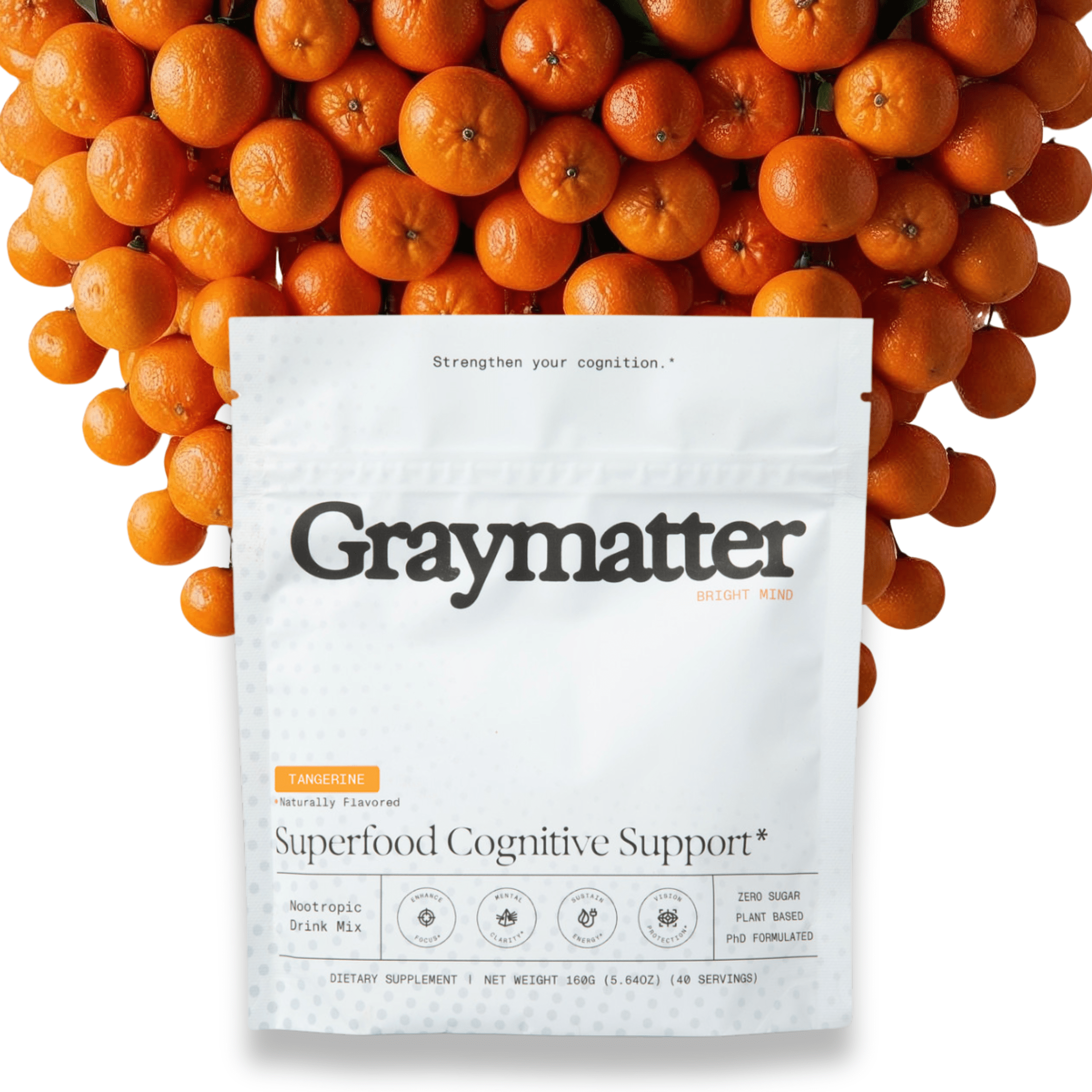
Graymatter Bright Mind was engineered as a cognitive performance protocol for exactly the kind of sustained output that agentic work demands. Brain-X nootropics, including Alpha GPC and L-Tyrosine, replenish the exact neurotransmitters depleted through AI oversight. Paired with adaptogens like Rhodiola and Ashwagandha, clinically mapped to mental fatigue from information overload and stress from rapid decision-making, plus plant-based clean energy that doesn't spike and crash, the full stack delivers 4-8 hours of calm, focused output. Try the Starter Kit
Build a Cognitive Protocol That Matches Your Stack
You wouldn't push to prod without observability. Stop deploying your brain without a support stack.
The developers who sustain performance in the age of agentic coding are not the ones grinding harder. They are the ones treating cognitive nutrition as core infra, not an afterthought.
Build a daily cognitive protocol that keeps up with your stack. Subscribe and save 20%
Use code BUILDSMART for 15% off your first subscription.
FAQs
What is AI brain fry?
AI brain fry is mental fatigue caused by excessive oversight of AI tools beyond your cognitive capacity. Researchers at BCG identified it as distinct from traditional burnout, driven by information overload and constant context switching rather than emotional exhaustion.
Why does vibe coding cause burnout?
Vibe coding creates rapid dopamine feedback loops that push developers to take on more work, code longer hours, and manage multiple agent workflows simultaneously. This leads to cognitive overload and a breakdown in your ability to maintain a clear mental model of your project.
How does cognitive overload affect developers specifically?
Developers experiencing cognitive overload from AI tools report 39% more major errors, 33% more decision fatigue, and a 39% higher intent to quit. The strain hits hardest because engineering demands sustained attention and working memory, which are the exact systems AI oversight taxes.
What are nootropics, and how do they help with AI brain fog?
Nootropics are compounds that support neurotransmitter production, memory, and focus. Ingredients like Alpha GPC and L-tyrosine replenish acetylcholine and dopamine, the brain chemicals depleted by sustained AI oversight and rapid decision-making.
Can I reduce AI coding burnout without quitting AI tools?
Yes. The goal is not to stop using AI but to support the brain that manages it. Limiting simultaneous agent use to three or fewer, taking structured breaks, and building a daily cognitive nutrition protocol can help sustain performance without the crash.

Leave a comment