


You can take two nootropics with the same ingredients, the same dosage, and expect the same results, but that's rarely what happens. One leaves you feeling sharper and more focused, while the other barely registers.
The difference often isn't the ingredient itself. It's the bioavailability that tells how much of a nootropic your body actually absorbs and can put to use. Here's what you need to know.
What Bioavailability Means for Nootropics
Bioavailability measures how much of an ingested compound reaches the bloodstream in active form.
According to the NIH's StatPearls pharmacology reference, intravenous administration achieves 100% bioavailability because the substance enters the bloodstream directly. Oral supplements, however, must survive stomach acid, pass through the intestinal wall, and undergo first-pass metabolism in the liver before reaching circulation [1].
At each stage, some percentage of the active compound is broken down, converted into inactive metabolites, or simply not absorbed. For nootropic supplements, that journey determines whether a stated dose on the label translates into an actual cognitive effect.
Why Some Nootropics Absorb Better Than Others
Nootropic absorption varies widely depending on the molecular characteristics of each compound.
Water-soluble compounds
L-theanine and caffeine tend to absorb quickly through the intestinal lining. The molecular structure allows rapid uptake, which is why effects from caffeine and L-theanine can be noticeable within 15-30 minutes of ingestion.
Fat-soluble compounds
Phosphatidylserine, Ashwagandha withanolides, and curcumin-related polyphenols require the presence of dietary fat for adequate absorption. Without fat in the digestive system, a significant portion of the dose may pass through the gut unabsorbed.
Large or complex molecules
Certain herbal extracts face additional barriers. Higher molecular weight compounds often have lower permeability across the intestinal wall, reducing the percentage that enters circulation.
A few specific examples illustrate the range:
- Caffeine: Near-complete oral absorption. Bioavailability approaches 99%.
- Alpha GPC: Well-absorbed orally. Crosses the blood-brain barrier to support acetylcholine levels, with effects typically noticeable within 30-60 minutes.
- Ashwagandha: Withanolide bioavailability improves significantly with fat co-ingestion. Standardized extracts (like those standardized to 5% withanolides) offer more consistent uptake than raw root powder.
- Phosphatidylserine: A fat-soluble compound that benefits from dietary fat for adequate absorption. Sunflower-derived forms are commonly used for cleaner sourcing.
- Lion's Mane: Bioactive compounds (hericenones and erinacines) vary in absorption depending on extract quality, concentration, and preparation method.
How Delivery Format Affects Nootropic Effectiveness
The format in which a nootropic arrives shapes how quickly and completely the active ingredients reach the brain.
Capsules and Tablets
Standard capsules must first dissolve in the stomach before the active ingredients can be released for absorption. Dissolution time varies depending on capsule material, filler composition, and stomach pH. For some compounds, capsule-based delivery works well. For others, the delayed release and incomplete dissolution limit effectiveness.
Powder-Based Drink Mixes
Drinkable nootropics skip the capsule dissolution step entirely. Active ingredients enter the stomach already in solution or suspension, allowing contact with the intestinal lining to begin sooner. For water-soluble compounds, a liquid format may reduce the time to onset of effects.
A powder-based format also accommodates higher ingredient loads per serving. A single capsule holds roughly 500-700 mg of material. A drink mix can deliver several grams, making room for comprehensive multi-ingredient formulas.
Sublingual and Liposomal Delivery
Sublingual absorption (under the tongue) bypasses first-pass liver metabolism, delivering active compounds directly into the bloodstream. Liposomal delivery wraps active ingredients in fat-based vesicles to protect the compounds through the digestive tract and improve cellular uptake.
Both methods can dramatically improve bioavailability for compounds with otherwise poor oral absorption. However, sublingual delivery is limited to small doses, and liposomal formulations tend to carry a significant price premium.
Practical Ways to Improve Nootropic Absorption
Regardless of format, a few strategies may help maximize how well nootropics work in practice:
- Take fat-soluble nootropics with food. A meal containing healthy fats (avocado, olive oil, nuts) improves absorption of compounds like phosphatidylserine, curcumin, and Ashwagandha.
- Pair synergistic compounds. Piperine (from black pepper) has been shown to improve the absorption of curcumin and certain other polyphenols. L-theanine and caffeine together may enhance cognitive performance more than either compound alone.
- Stay consistent. Some nootropics, particularly adaptogens like Rhodiola and Ashwagandha, build effects over days and weeks of consistent use. Skipping doses interrupts the accumulation window.
- Avoid interference. Certain minerals (calcium, iron, zinc) can compete for absorption when taken simultaneously. Spacing nootropic and mineral supplements apart may help both absorb more effectively.
- Choose transparent formulas. Products that list individual ingredient amounts allow you to verify whether each compound is present at a dose that published research has actually studied. Proprietary blends hide the information needed to evaluate nootropic effectiveness at the dosage level.
How Long Nootropics Take to Work
Onset time depends on the compound, the delivery format, and whether the nootropic produces acute or cumulative effects.
- Acute-effect nootropics like caffeine, Alpha GPC, and L-Tyrosine can produce noticeable changes in focus and alertness within 15-60 minutes of ingestion.
- Cumulative-effect nootropics like Lion's Mane, Rhodiola, and Ashwagandha often require 2-4 weeks of daily use before meaningful benefits emerge. Bacopa, in particular, is widely noted for requiring sustained use before improvements in memory and processing speed become apparent.
A well-designed nootropic formula includes both categories: acute compounds for immediate mental clarity and cumulative compounds for long-term brain fog reduction and cognitive support.
Beyond the Label
Bioavailability determines how much of a nootropic your body can actually use. Even a high-dose formula offers limited value if the active compounds aren't absorbed effectively. Delivery format, ingredient form, food intake, and formula transparency all influence whether a nootropic delivers meaningful cognitive support.
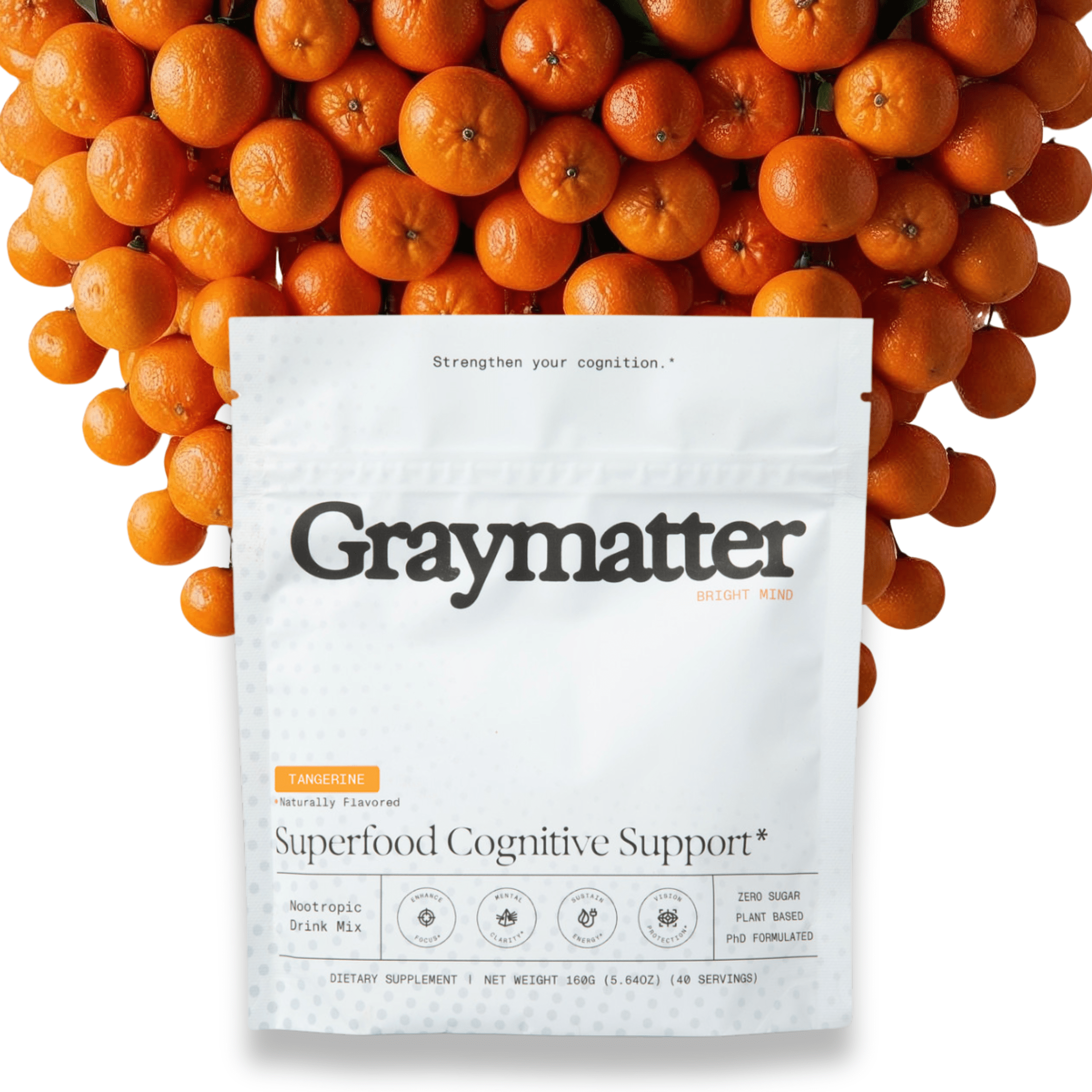
If you're looking for a formula designed with both ingredient quality and delivery in mind, Graymatter Bright Mind uses a plant-based, powder-based drink mix format combining fast-acting compounds like L-theanine and plant-based caffeine from Korean Matcha and Guarana with cumulative-effect nootropics and adaptogens for sustained daily support.
Compliance note: Graymatter Bright Mind is a dietary supplement that supports focus and cognitive function; not intended to diagnose, treat, or cure any medical condition. Please consult a healthcare provider regarding any treatment plan.
FAQs
What does bioavailability mean for nootropics?
Bioavailability measures the percentage of an ingested nootropic compound that reaches the bloodstream in active form and becomes available for cognitive effect.
Why do some nootropics absorb better than others?
Molecular size, water vs. fat solubility, and susceptibility to first-pass liver metabolism all affect how efficiently a nootropic compound crosses the intestinal wall.
Does taking nootropics with food improve absorption?
For fat-soluble compounds like phosphatidylserine, curcumin, and Ashwagandha, yes. A meal containing healthy fats can significantly improve uptake and effectiveness.
Do drinkable nootropics absorb faster than capsules?
Drinkable formats skip capsule dissolution, allowing active ingredients to contact the intestinal lining sooner. For water-soluble compounds, onset may occur more quickly.
How long do nootropics take to work?
Acute nootropics like caffeine and L-theanine can work within 15-60 minutes. Cumulative nootropics like Bacopa and Lion's Mane typically require 2-4 weeks of daily use.
Leave a comment