

You've probably slipped into a flow state before, whether you recognized it or not.
A two-hour coding session that felt like twenty minutes. A conversation where every word landed perfectly. A workout where your body moves without you having to think about direction.
In those moments, your attention feels effortless, distractions fade into the background, and you're fully immersed in what you're doing. Psychologists call this experience “flow”, and modern neuroscience is beginning to explain what makes it possible.
What Is Flow State?
Flow state is a mental condition where you become completely absorbed in a task. Your attention narrows, distractions fade, and performance rises, often without conscious effort.
Psychologist Mihaly Csikszentmihalyi first defined the concept in the 1970s after studying artists, athletes, and musicians who described losing themselves in work. He identified several characteristics common to the experience:
- Complete concentration on the task at hand
- A sense of personal control over the activity
- Loss of self-consciousness and inner criticism
- Distorted perception of time (hours feel like minutes)
- The activity feels intrinsically rewarding
- A match between the challenge level and your skill level
That last point matters most. Flow typically happens when a task is difficult enough to demand full attention but not so difficult that frustration takes over.
What Happens in Your Brain During Flow State?
Here's where most explanations stop at "your brain releases feel-good chemicals." The reality is more specific.
Your Prefrontal Cortex Quiets Down
The most significant brain change during flow involves a process called transient hypofrontality. The prefrontal cortex, the area behind your forehead responsible for self-monitoring, time awareness, and analytical thinking, temporarily reduces activity.
What that means in practice:
- Your inner critic goes silent: The dorsolateral prefrontal cortex, which handles self-doubt and second-guessing, dials down.
- Time perception shifts: Since time is processed across the prefrontal cortex, reduced activity makes hours feel like minutes.
- Decision-making becomes automatic: Instead of deliberating over each move, your brain shifts from effortful, conscious processing to faster, intuitive execution.
The brain is not working harder during flow. Certain regions are actually doing less, allowing attention and skill to operate without interference.
Your Brainwaves Change
During normal waking activity, the brain produces beta waves (fast, alert, often scattered). During flow, the brain shifts toward alpha and theta wave patterns.
- Alpha waves are associated with relaxed focus and calm alertness
- Theta waves are linked to creativity, insight, and the state just before sleep
The shift from beta to alpha-theta is a key reason flow feels so different from regular concentration. Regular focus often feels effortful. Flow feels effortless.
A Neurochemical Cocktail Fires
Flow triggers the release of several performance-enhancing neurochemicals at once:
- Dopamine – drives motivation, pattern recognition, and reward
- Norepinephrine – increases arousal, attention, and emotional engagement
- Endorphins – reduce pain signals, creating a sense of ease
- Anandamide – promotes lateral thinking and may reduce anxiety
- Serotonin – contributes to the sense of well-being felt after a flow session
The combination of the neurochemical cocktail above explains why flow often feels like peak cognitive performance. You're not just focused. You're motivated, creative, and emotionally engaged, all at once.
Why Flow Is So Hard to Access
If flow sounds appealing, that makes sense. The challenge is that modern environments actively work against the conditions flow requires.
According to CDC/NIOSH data, close to 30% of American workers report always or often finding work stressful [1]. Chronic stress elevates cortisol, fragments attention, and keeps the prefrontal cortex in overdrive, exactly the opposite of what flow demands.
Other common barriers:
- Constant notifications: Every ping pulls attention away, and recovering from an interruption may take 15-25 minutes.
- Multitasking: Flow requires single-task focus. Switching between tabs and tasks prevents the deep engagement flow that depends on.
- Brain fog and fatigue: Low energy and poor mental clarity make the challenge-to-skill match harder to hit.
- Anxiety and self-doubt: An overactive inner critic keeps the prefrontal cortex firing rather than quieting down.
How to Get Into Flow State More Often
Flow cannot be forced, but the right conditions make the experience far more likely.
- Match challenge to skill: The task should stretch you slightly beyond comfort, roughly 4% beyond your current ability.
- Eliminate distractions: Phone off. Notifications silenced. A dedicated block of 60-90 minutes with no interruptions.
- Set clear goals: Know exactly what you're working toward before you start. Ambiguity kills flow.
- Get immediate feedback: Activities where you can see progress in real time (writing, coding, playing music, sports) naturally encourage flow.
- Prioritize physical health: Sleep, nutrition, and stress management create the foundation. A tired, poorly nourished brain is unlikely to shift into a flow state.
- Support nootropic pathways: Compounds like L-Theanine may support alpha wave activity. Adaptogens like Rhodiola may help manage cortisol. Caffeine supports alertness and dopamine activity.
The Bottom Line
Flow state is not mystical. The experience is a measurable brain state involving reduced prefrontal cortex activity, shifted brainwave patterns, and a powerful neurochemical release. Accessing flow more often is less about willpower and more about creating the right conditions, the right environment, and the right neurochemical foundation.
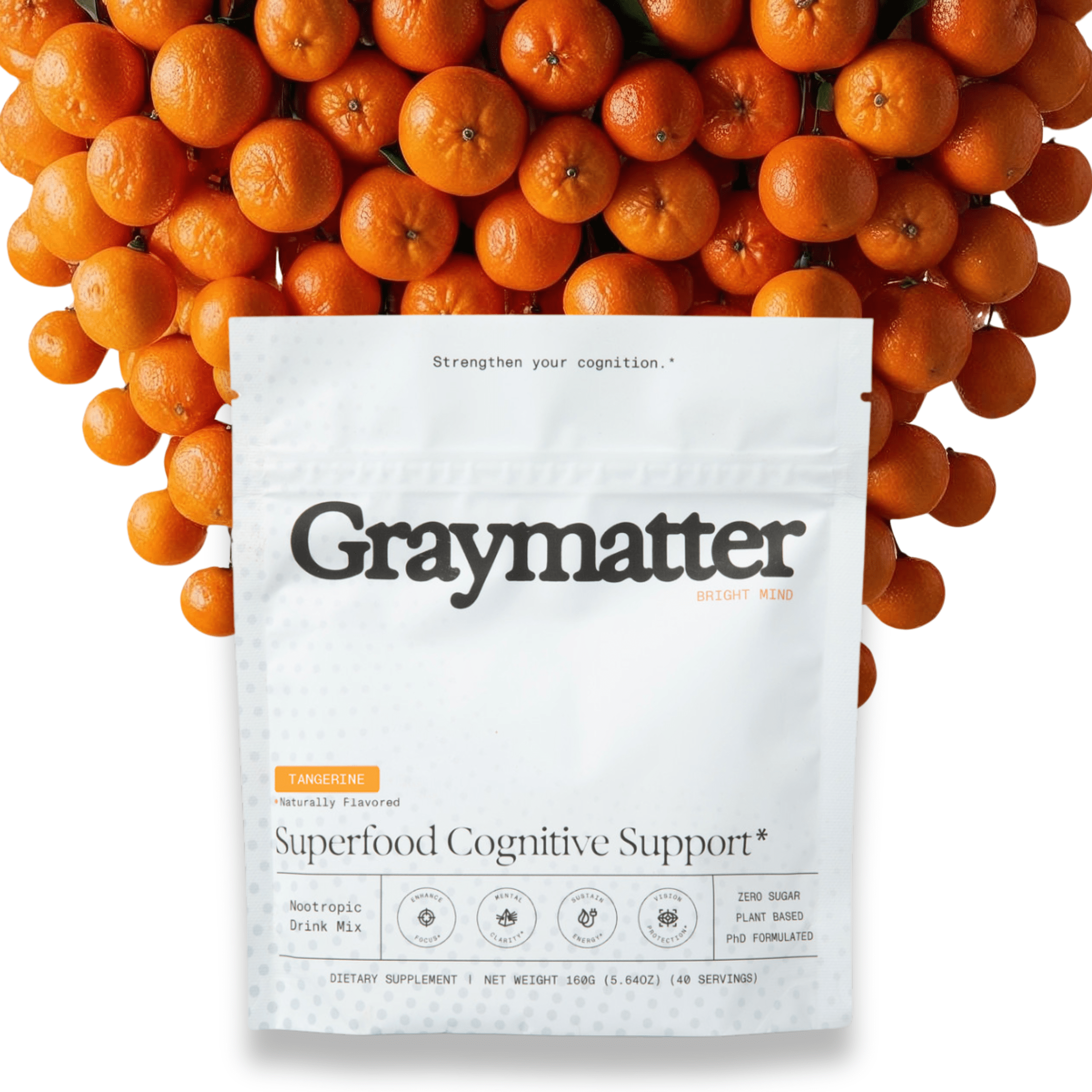
Looking to create more opportunities for flow in your day? Graymatter Bright Mind is a plant-based drink mix with 27 active ingredients, including L-Theanine, Rhodiola, Alpha GPC, and caffeine that supports calm focus, mental clarity, and sustained attention to help set the stage for deeper work.
Compliance note: Graymatter Bright Mind is a dietary supplement that supports focus and cognitive function; not intended to diagnose, treat, or cure any medical condition. Please consult a healthcare provider regarding any treatment plan.
FAQs
What is flow state in simple terms?
Flow state is a mental condition of complete absorption in a task, where focus sharpens, distractions disappear, time distorts, and performance rises, often without conscious effort.
What happens in your brain during flow state?
The prefrontal cortex temporarily quiets down, brainwaves shift from beta to alpha-theta patterns, and neurochemicals like dopamine and norepinephrine are released simultaneously.
How long does flow state last?
Flow sessions typically range from 30 minutes to 2 hours. Duration depends on the task, environment, energy levels, and the balance between challenge and skill.
Can you train yourself to enter flow state?
Not directly, but you can set up conditions that favor flow: clear goals, matched challenge-to-skill level, eliminated distractions, and sustained single-task focus.
Does flow state make you more productive?
People in flow often report a dramatic increase in output and creativity. The combination of deep focus, reduced self-doubt, and heightened pattern recognition supports peak performance.
Can nutrition affect your ability to reach flow state?
Adequate nutrition supports the neurochemical processes behind flow. Compounds that support dopamine, acetylcholine, and alpha wave activity may help create a more favorable foundation.
Leave a comment