


You grab an energy drink mid-afternoon to push through a slump. For an hour, maybe two, you feel sharp and alert. Then the floor drops out. Fatigue rolls in harder than before, your head starts to throb, and even a simple email feels like heavy lifting.
Do energy drinks make you crash? Yes, and the reasons go deeper than just "the caffeine wore off." Here's what's actually happening inside the body and brain, and what you can do about the cycle.
What Causes an Energy Drink Crash?
An energy drink crash is the sharp drop in energy, mood, and focus that follows the initial stimulant spike. Two main mechanisms drive the crash: caffeine rebound and blood sugar collapse. Most commercial energy drinks trigger both at the same time.
The Caffeine Rebound
Caffeine supports alertness through blocking adenosine, a brain chemical that signals sleepiness. In moderate, slow-release doses, that process works well. The problem with most energy drinks is the dose and the speed.
A single can often contains 150 to 300mg of synthetic caffeine that absorbs rapidly, creating a sharp spike. Once that spike wears off (typically 3 to 5 hours later), all the adenosine that accumulated in the background floods the receptors at once, leaving you more fatigued than before.
The Blood Sugar Collapse
According to the NIH's National Center for Complementary and Integrative Health (NCCIH), a single 16-ounce energy drink may contain 54 to 62 grams of added sugar, exceeding the daily recommended maximum [1].
That much sugar in liquid form causes a rapid blood glucose spike. The pancreas responds with an insulin surge that often overcorrects, dropping blood sugar below baseline and bringing fatigue, shakiness, irritability, and brain fog.
Common Symptoms of Crashing From Energy Drinks
The crash isn't just "feeling tired again." Common symptoms include:
- Sudden, heavy fatigue
- Headaches
- Difficulty concentrating or holding a thought
- Irritability and mood swings
- Jitteriness followed by sluggishness
- Increased anxiety
- Strong cravings for more caffeine or sugar
How severe the crash feels depends on how much caffeine and sugar were consumed, whether you ate recently, your hydration levels, and your individual caffeine tolerance.
Energy Drinks vs. Plant-Based Alternatives
Not all energy sources crash the same way. The key differences come down to caffeine type, sugar content, and what else is in the formula.
|
Factor |
Standard Energy Drink |
Plant-Based Nootropic Drink |
|
Caffeine source |
Synthetic, fast-absorbing |
Plant-derived (Matcha, Guarana, Green Tea) |
|
Sugar content |
38 to 62g per serving |
Zero or minimal |
|
L-Theanine |
Rarely included |
Often paired with caffeine for calm alertness |
|
Energy duration |
1 to 3 hours with a crash |
4 to 8 hours, gradual decline |
|
Cognitive support |
None |
Nootropics and adaptogens may support mental clarity |
|
Crash risk |
High |
Low to none |
The difference comes down to how caffeine is delivered and what surrounds the caffeine. Plant-based caffeine paired with L-Theanine releases more slowly, and when combined with adaptogens and nootropics, the brain gets both energy and cognitive support rather than just raw stimulation.
How to Avoid an Energy Drink Crash
Crashing from energy drinks isn't inevitable. If you rely on energy drinks and want to break the crash cycle, a few practical shifts can make a difference.
Eat before or alongside caffeine
A meal with protein, healthy fats, and slow-digesting carbohydrates helps stabilize blood sugar and prevents the insulin spike that drives the crash.
Stay hydrated
Caffeine has a mild diuretic effect. Dehydration worsens fatigue, headaches, and cognitive function. Drink water alongside any caffeinated beverage.
Switch to low/zero-sugar options
Removing the sugar spike eliminates half the crash equation. Look for drinks that derive energy from plant-based caffeine and L-Theanine rather than refined sugar.
Cap your daily caffeine intake
Most health guidelines suggest no more than 400mg per day for healthy adults. Spreading caffeine across the day in smaller doses prevents the sharp spike-and-drop pattern.
Don't stack energy drinks
Reaching for a second can when the first wears off deepens the eventual crash and may push caffeine intake into uncomfortable territory.
Prioritize sleep
Caffeine masks tiredness but doesn't replace rest. If you're regularly turning to energy drinks to compensate for poor sleep, the crash cycle will keep repeating. Aim for 7 to 9 hours per night.
A Better Way to Stay Sharp
An energy drink crash follows a predictable pattern: synthetic caffeine wears off fast, sugar spikes and drops, and the brain is left running on empty. Breaking the cycle starts with choosing a smarter source of energy.
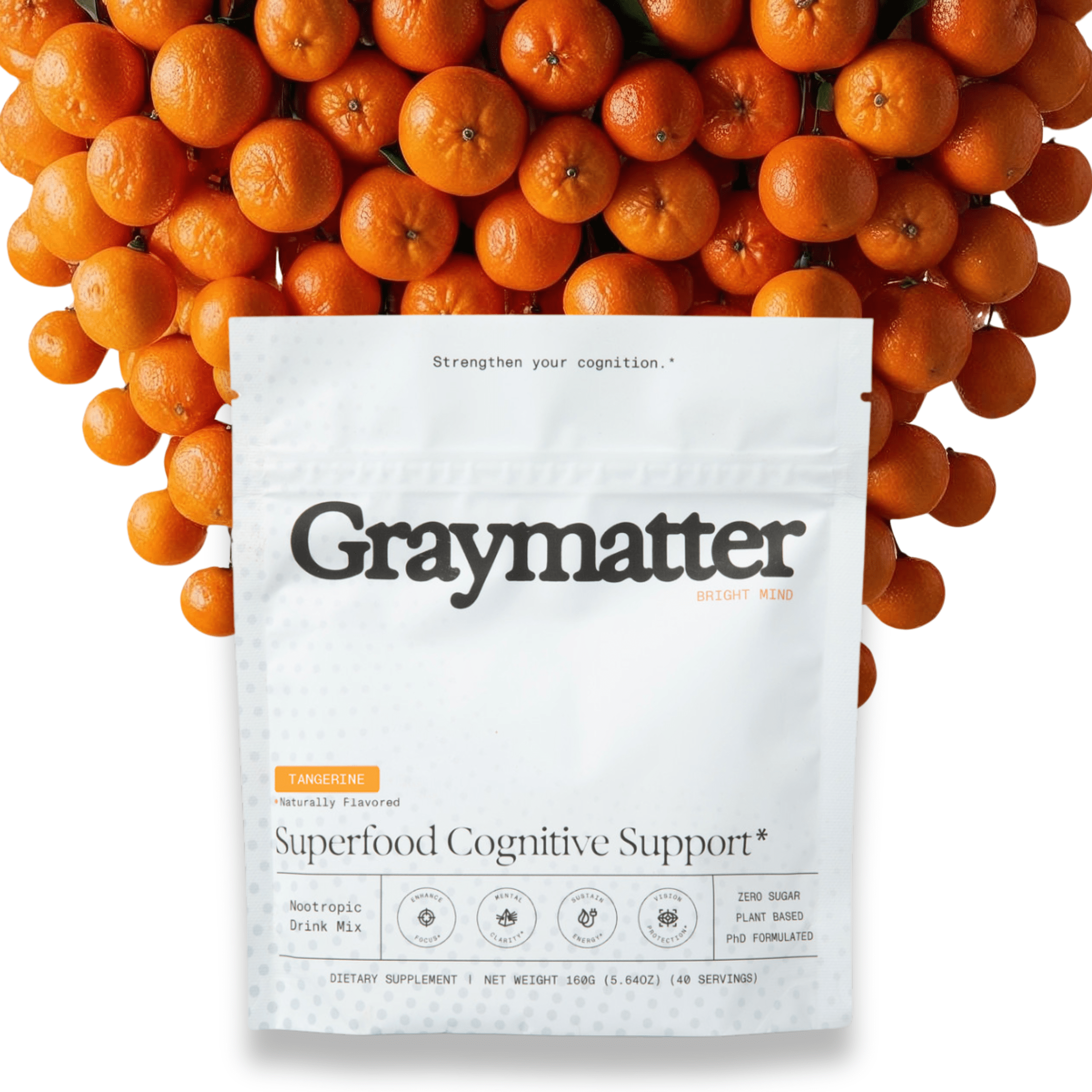
Graymatter Bright Mind is built around a different model. Plant-based caffeine from Korean Matcha and Guarana releases gradually alongside L-Theanine for calm alertness. Adaptogens support stress resilience, while ootropics support focus and memory. A steady, sustained energy that lets the brain do what the brain does best.
Compliance note: Graymatter Bright Mind is a dietary supplement that supports focus and cognitive function; not intended to diagnose, treat, or cure any medical condition. Please consult a healthcare provider regarding any treatment plan.
Frequently Asked Questions
What exactly is an energy drink crash, and why does the crash make you so tired?
An energy drink crash is the sharp drop in energy after caffeine and sugar wear off. Accumulated adenosine floods the brain while blood sugar drops below baseline, creating fatigue worse than before.
How do high caffeine levels in energy drinks lead to a sudden crash later?
Caffeine blocks adenosine (the sleepiness chemical) temporarily. Once caffeine wears off, all the built-up adenosine hits at once, causing a sudden wave of fatigue and difficulty concentrating.
Does the sugar content in most energy drinks make the crash worse?
Yes. High sugar causes a rapid blood glucose spike followed by an insulin overcorrection. The resulting blood sugar drop adds fatigue, shakiness, and irritability on top of the caffeine rebound.
How long after drinking an energy drink does the typical crash start?
Most people experience the crash 2 to 5 hours after consumption, depending on caffeine amount, sugar content, whether food was eaten, and individual metabolism and tolerance.
What are the best ways to prevent or reduce an energy drink crash naturally?
Eat before consuming caffeine, stay hydrated, switch to plant-based caffeine with L-Theanine, cap daily intake at 400mg, and prioritize quality sleep to reduce dependence on stimulants.
Leave a comment