


Nootropics are everywhere right now. Social media, wellness podcasts, biohacking communities, and even mainstream news all talk about these "smart supplements." But with so many products flooding the market, one question that keeps coming up is whether they are even safe.
Understanding how they work and what to watch for can make things less confusing. Let’s take a closer look at what you actually need to know before putting anything in your body.
What Nootropics Are (and Are Not)
Nootropics are substances designed to support brain function, including focus, memory, and mental clarity. They generally fall into two categories:
- Natural nootropics: Plant-based compounds, amino acids, vitamins, and herbal extracts with a long history of traditional use. Examples include L-Tyrosine, Alpha GPC, ashwagandha, rhodiola, lion's mane, and matcha-derived L-theanine.
- Synthetic nootropics: Lab-created compounds like piracetam, modafinil, and phenibut. Some require prescriptions. Others are sold as supplements despite limited long-term safety data.
Are nootropics legit? The natural category has a stronger safety profile and a more established research base. The synthetic category carries more unknowns, particularly when used without medical supervision.
How Nootropics Work in the Brain
Natural nootropics typically support cognition through a few key mechanisms:
Neurotransmitter Support
Some natural nootropics help your brain make or maintain key chemicals. L-Tyrosine supports dopamine for focus and motivation, Alpha GPC provides choline for memory, and Huperzine A may help preserve acetylcholine already in the brain. These ingredients give your brain the resources it needs without forcing artificial spikes.
Stress and Cortisol Modulation
Adaptogens like ashwagandha and rhodiola help regulate the HPA axis, the system that controls your stress response. When cortisol stays chronically elevated, focus, memory, and mood all suffer.
Adaptogens may help bring cortisol back to a healthier baseline, allowing your brain to operate more clearly under daily pressure and demands.
Neuroprotection and Blood Flow
Ingredients like Nitrosigine may improve cerebral blood flow, supporting better nutrient and oxygen delivery to the brain. Lion's mane contains compounds that may stimulate nerve growth factor (NGF), potentially supporting the maintenance and repair of brain cells.
Are Nootropics Good for You?
The answer depends on what you are taking and how you are using it.
What the Research Supports
Natural botanical nootropics are widely used for brain health, with nearly 23% of adults in the U.S. currently taking a supplement for brain health [1]. The review found that herbal supplements with nootropic effects have generally shown a low risk of side effects, and contraindications have been minimal.
Common nootropic ingredients and their benefits:
|
Ingredient |
Primary Benefit |
|
Ashwagandha |
Stress reduction, cortisol regulation |
|
Alpha GPC |
Memory, acetylcholine support |
|
L-Tyrosine |
Focus under stress, dopamine precursor |
|
Rhodiola Rosea |
Mental fatigue, attention |
|
Lion's Mane |
Neuroprotection, nerve growth |
|
Huperzine A |
Acetylcholine preservation |
Where the Risk Lies
Safety concerns with nootropics are almost always tied to:
- Synthetic compounds: Limited safety data, especially for racetam-class drugs.
- Unregulated products: Can contain undisclosed ingredients or inaccurate dosages.
- High or combined doses: May cause jitteriness, anxiety, or sleep disruption.
- Medication interactions: Can interfere with antidepressants, blood thinners, or blood pressure drugs.
A well-formulated nootropic stack that uses researched, plant-based ingredients at appropriate doses avoids most of these concerns. The safest approach is choosing transparency over hype.
How to Choose a Safe Nootropic
Not all supplements are held to the same standard. A flashy label does not equal a safe product. Here is what to look for when evaluating any nootropic:
- Transparent ingredient list: Every ingredient and its dosage should be clearly stated, not hidden behind a "proprietary blend."
- Research-backed ingredients: Look for compounds with published clinical trials, not just marketing claims.
- Third-party testing: Quality manufacturers test for purity, potency, and contaminants.
- Appropriate caffeine levels: Some nootropics load up on caffeine to create an immediate "effect." A product with moderate, plant-derived caffeine from sources like matcha and guarana paired with L-theanine provides a smoother experience.
- Consult your doctor: Especially if you are on medication or managing a health condition, a healthcare provider should review any new brain supplement.
The Bottom Line on Nootropic Safety
So, are nootropics safe? Plant-based nootropics with researched ingredients, transparent labeling, and appropriate dosing have a solid safety profile for most healthy adults. Synthetic or unregulated products carry more risk and deserve more caution.
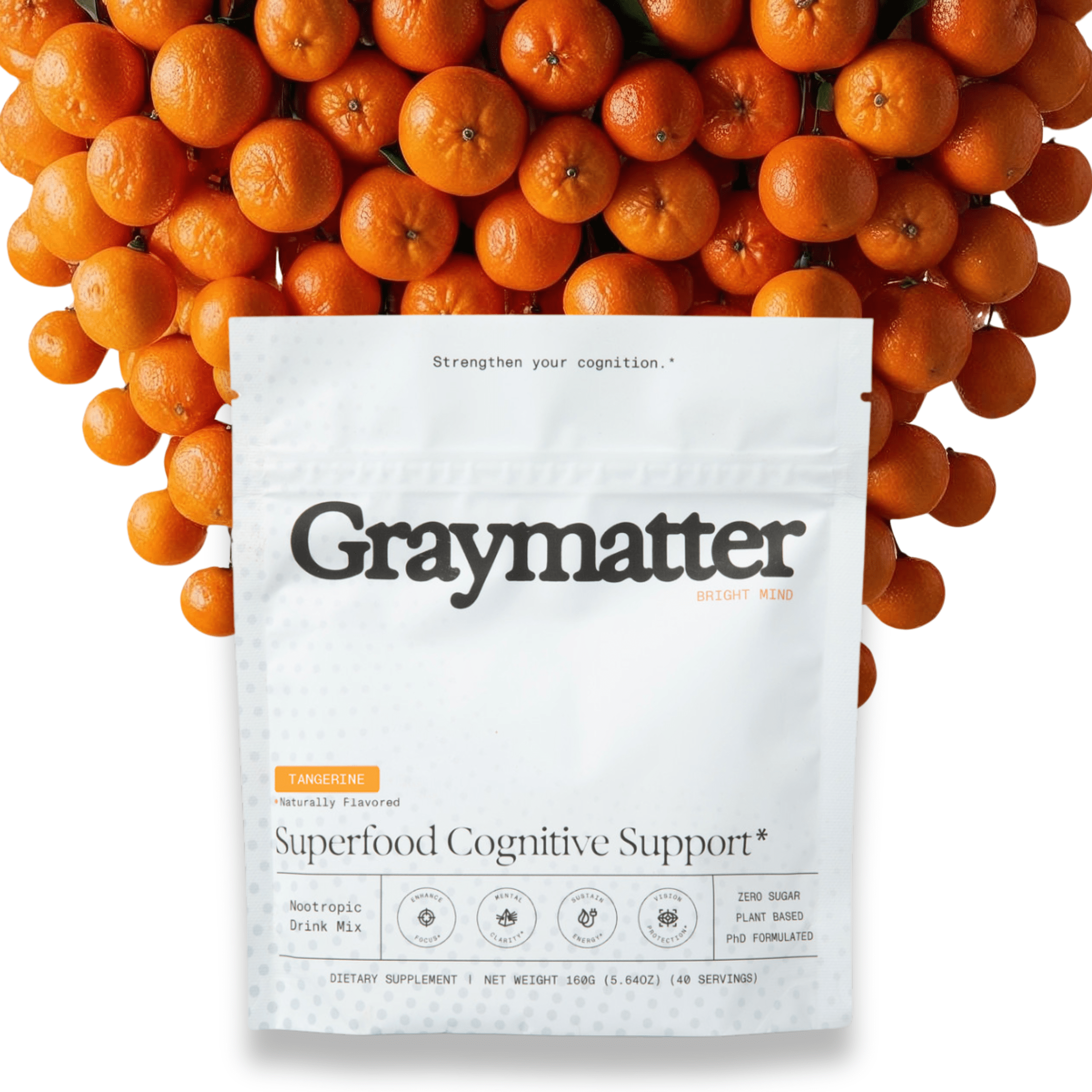
Bright Mind by Graymatter uses 27 plant-based, research-backed ingredients at clearly listed dosages, with no proprietary blends or synthetic compounds. Bright Mind is not intended to diagnose, treat, or cure any medical condition. Consult a healthcare professional before use.
Frequently Asked Questions
Q1. Are nootropics safe for long-term use?
Natural nootropics with established safety profiles, like ashwagandha, Alpha GPC, and L-Tyrosine, are generally considered safe for daily use at recommended doses.
Q2. Do nootropics have side effects?
Side effects from natural nootropics are typically mild and uncommon, including occasional digestive discomfort. Synthetic nootropics may carry more significant risks depending on the compound and dosage.
Q3. Are natural nootropics safer than synthetic ones?
Generally, yes. Natural nootropics have longer histories of traditional use and a growing base of clinical research. Synthetic compounds often lack long-term safety data for healthy individuals.
Q4. Are nootropics FDA-approved?
Dietary supplements, including natural nootropics, are regulated by the FDA under the Dietary Supplement Health and Education Act (DSHEA) but are not "approved" in the same way as pharmaceutical drugs. Manufacturers are responsible for ensuring safety and accurate labeling.
Q5. How do I know if a nootropic product is high quality?
Look for transparent ingredient labels with specific dosages, third-party testing certifications, research-backed ingredients, and clear contact information from the manufacturer.
Q6. Can nootropics replace prescription medication for focus or anxiety?
Nootropics are not a substitute for prescribed medication. Anyone managing a diagnosed condition should work with a healthcare provider to determine the most appropriate treatment plan.
Leave a comment