





You're sitting at your desk, staring at the screen. You know exactly what needs to be done, but your mind keeps drifting. The report that should take an hour stretches into three. The medication that once helped now leaves you feeling anxious, robotic, or just...not yourself. Sound familiar?
If you're tired of the side effects, tolerance issues, and dependency concerns that come with prescription focus medications, you're not alone. Millions are seeking alternatives that support brain function without the downsides of traditional pharmaceuticals.
In this comprehensive guide, we’lll walk you through everything you need to know about natural nootropics—from their mechanisms of action to specific ingredients and exactly how they stack up against prescription options. Whether you're managing ADHD symptoms or simply seeking better cognitive performance, you'll find the answers you need to make an informed decision about your brain health.
What Are Nootropics? Beyond the Basics
Nootropics aren't just trendy supplements—they're compounds that enhance brain function through specific biological pathways. But not all "brain boosters" qualify as true nootropics. To earn this classification, a compound must:
-
Enhance memory and learning ability
-
Protect the brain from physical or chemical injury
-
Improve neuronal firing mechanisms
-
Demonstrate low toxicity and few side effects
-
Work with the brain's natural processes rather than forcing them
This last point represents the fundamental difference between natural nootropics and most prescription stimulants. While medications like Adderall force neurotransmitter release (creating potential for dependency and tolerance), quality natural nootropics provide your brain with the raw materials and support it needs to function optimally on its own terms.
Prescription Medications vs. Natural Nootropics: The Critical Differences
|
Factor |
Prescription Stimulants |
Natural Nootropics |
|
Mechanism |
Force neurotransmitter release and/or block reuptake |
Provide precursors and support for natural production |
|
Onset of Action |
Rapid (20-60 minutes) |
Gradual (hours to days for full effect) |
|
Tolerance |
Common with regular use |
Minimal to none with quality formulations |
|
Dependency Risk |
Moderate to high |
Minimal to none |
|
Withdrawal Effects |
Can be significant |
Typically minimal |
|
Side Effects |
Often include anxiety, insomnia, appetite suppression, cardiovascular effects |
Generally minimal when properly formulated |
|
Legal Status |
Controlled substances requiring prescription |
Available without prescription |
|
Insurance Coverage |
Often covered (with prescription) |
Typically not covered |
|
Long-term Safety |
Questions remain about long-term impacts |
Generally considered safe for extended use |
Many users describe the difference as "being pushed" versus "being supported." Prescription stimulants push your brain into heightened activity, while natural nootropics provide the resources your brain needs to function at its best naturally.
The Top 5 Natural Nootropics: A Deep Dive into Their Effects
Let's explore the five most research-backed natural nootropics, examining exactly how they work and their specific cognitive benefits.
1. L-Tyrosine: Dopamine Support for Sustained Focus
For anyone who's struggled with attention issues, understanding dopamine's crucial role in focus makes L-Tyrosine particularly interesting. This amino acid serves as the direct precursor to dopamine, the neurotransmitter most closely associated with attention, motivation, and reward.
Mechanism of Action: Your brain converts L-Tyrosine into L-DOPA, which then becomes dopamine through this pathway:
L-Tyrosine → L-DOPA → Dopamine
This process requires specific enzymes and cofactors (including vitamin B6), all working together to maintain healthy dopamine levels.
What makes it different from stimulants: Rather than forcing dopamine release (which can deplete stores over time), L-Tyrosine simply ensures your brain has the raw materials needed for natural production. This fundamental difference explains why L-Tyrosine doesn't create the same dependency issues as prescription stimulants.
Research highlight: A double-blind, placebo-controlled study published in the Journal of Psychiatric Research found that L-Tyrosine significantly improved working memory and cognitive flexibility under stress—precisely when many people experience their worst attention problems.
Effective dosage range: 500-2000mg daily, with best results typically at 1000-1500mg for cognitive support.
Who benefits most: People who struggle with focus under pressure, those who experience "crash" periods during the day, and anyone looking for sustainable attention support without stimulant effects.
2. Alpha GPC: Memory Enhancement Through Acetylcholine Support
While much attention focuses on dopamine for ADHD, memory issues often accompany attention problems. Alpha GPC addresses this through support of acetylcholine, the neurotransmitter most critical for memory formation and recall.
Mechanism of Action: Alpha GPC rapidly crosses the blood-brain barrier and delivers choline directly to your brain, where it supports acetylcholine synthesis:
Alpha GPC → Choline → Acetylcholine
This increased acetylcholine availability enhances communication between neurons, particularly in brain regions responsible for learning and memory.
Clinical evidence: A landmark study in Clinical Therapeutics examined Alpha GPC supplementation in elderly patients with mild to moderate memory issues. After 90 days, the Alpha GPC group showed significant improvements in attention span, memory recall, and overall cognitive function compared to the placebo.
Effective dosage range: 300-1200mg daily, with cognitive benefits typically appearing at 400mg and above.
Who benefits most: People experiencing "tip-of-the-tongue" memory lapses, those needing to retain new information efficiently, and anyone looking to support long-term brain health.
3. Huperzine A: Acetylcholine Preservation for Sharper Thinking
Huperzine A works synergistically with Alpha GPC through a complementary mechanism that preserves acetylcholine rather than just supporting its production.
Mechanism of Action: Huperzine A temporarily inhibits acetylcholinesterase, the enzyme that breaks down acetylcholine. This creates a dual-action effect when combined with Alpha GPC:
Alpha GPC increases acetylcholine production
Huperzine A prevents its breakdown
The result is optimal acetylcholine levels that support memory, learning, and mental clarity.
Research-backed benefits: Multiple studies have demonstrated Huperzine A's cognitive benefits, including a meta-analysis published in the Journal of Neural Transmission that found significant improvements in memory and cognitive function across multiple trials.
Effective dosage range: 50-200mcg daily, with most research focusing on the 100mcg dose for cognitive enhancement.
Who benefits most: Students needing to retain information, professionals managing complex cognitive tasks, and those seeking protection against age-related cognitive decline.
4. Adaptogens (Ashwagandha & Rhodiola): Stress Regulation for Clear Thinking
For many people, especially those with ADHD, stress dramatically worsens cognitive issues. Adaptogens address this connection between stress and brain function.
Mechanism of Action: Adaptogens normalize the hypothalamic-pituitary-adrenal (HPA) axis, your body's stress response system. They work by:
-
Regulating cortisol levels
-
Modulating stress hormone receptors
-
Supporting healthy neurotransmitter balance under pressure
This stress regulation creates an optimal internal environment for focus and clear thinking.
Comparative research: Clinical studies have measured the effects of adaptogens against both placebo and conventional treatments:
|
Measure |
Ashwagandha |
Rhodiola |
Placebo |
|
Cortisol Reduction |
27.90% |
17.80% |
2.30% |
|
Stress Score Improvement |
44.00% |
36.20% |
5.50% |
|
Cognitive Performance Under Stress |
39.10% |
33.70% |
3.10% |
Data compiled from clinical studies published in the Journal of Alternative and Complementary Medicine and Phytomedicine
Effective dosage range:
-
Ashwagandha: 300-600mg daily (standardized extract)
-
Rhodiola: 200-600mg daily (standardized to 3% rosavins)
Who benefits most: People whose cognitive issues worsen under stress, those with anxiety alongside attention problems, and anyone seeking improved resilience to mental fatigue.
5. Nitrosigine®: Enhanced Blood Flow for Optimal Brain Function
While neurotransmitters receive most attention in cognitive enhancement, cerebral blood flow represents an equally crucial factor that many approaches overlook.
Mechanism of Action: Nitrosigine® enhances nitric oxide production, which acts as a vasodilator specifically benefiting cerebral circulation. This improved blood flow delivers:
-
More oxygen to brain cells
-
Enhanced glucose delivery for energy production
-
Better removal of metabolic waste products
-
More efficient delivery of other nutrients
Scientific validation: A placebo-controlled study published in the Journal of the International Society of Sports Nutrition found that Nitrosigine® significantly improved cognitive flexibility, processing speed, and executive function compared to placebo, with benefits appearing within hours of administration.
Effective dosage range: 750-1500mg daily, with research showing cognitive benefits at the 1500mg dosage.
Who benefits most: People needing sustained mental energy throughout the day, those experiencing cognitive fatigue during demanding tasks, and anyone looking to optimize overall brain function.
Self-Assessment: Finding Your Cognitive Enhancement Match
Every brain is unique, and your optimal cognitive support depends on your specific needs. Use this self-assessment to identify which aspects of brain function you most need to support:
Cognitive Type Assessment:
For each statement, rate how frequently you experience it (1=rarely, 5=constantly):
Focus & Attention:
-
I struggle to maintain attention on tasks that aren't immediately interesting
-
My mind wanders during conversations or meetings
-
I have difficulty completing tasks without external pressure
-
I'm easily distracted by minor noises or activities around me
Memory Function:
-
I forget important details from conversations or meetings
-
I have trouble recalling information I've recently learned
-
I misplace things like keys, phone, or wallet regularly
-
I need to re-read information multiple times to retain it
Stress Response:
-
My thinking becomes cloudy or disorganized under pressure
-
Stress significantly worsens my ability to focus
-
I feel mentally exhausted after periods of high pressure
-
My productivity decreases dramatically when I'm stressed
Mental Energy:
-
I experience significant energy crashes during the day
-
My cognitive performance declines noticeably in the afternoon
-
I rely heavily on caffeine to maintain mental energy
-
I feel mentally exhausted even after adequate sleep
Scoring Guide:
-
16-20 in any section: This area likely requires significant support
-
11-15 in any section: This area would benefit from targeted support
-
6-10 in any section: This area may need occasional support
-
Under 6 in any section: This area is functioning relatively well
Recommended Approach Based on Your Profile:
|
Primary Challenge |
Key Ingredients to Prioritize |
|
Focus & Attention |
L-Tyrosine, Nitrosigine® |
|
Memory Function |
Alpha GPC, Huperzine A |
|
Stress Response |
Ashwagandha, Rhodiola |
|
Mental Energy |
B Vitamins, Matcha, Nitrosigine® |
How to Implement Natural Nootropics: Your Step-by-Step Guide
If you're ready to try natural cognitive enhancement, follow this implementation plan for optimal results:
Week 1-2: Foundation Building
Day 1-3:
-
Start with the supplement in the morning, preferably with breakfast
-
Notice initial effects on mental clarity, which often appear within hours
-
Track energy levels throughout the day in a simple journal
Day 4-7:
-
Continue morning serving
-
Begin to observe effects on focus duration and task completion
-
Note any changes in stress resilience or mood
Day 8-14:
-
Maintain a consistent morning routine
-
Evaluate effects on more complex cognitive tasks
-
Note improvements in memory recall and learning capacity
Week 3-4: Optimization Phase
Fine-tuning timing:
-
Experiment with timing (morning vs. mid-morning)
-
Determine optimal serving relative to meals
-
Consider adding a second serving for afternoon demands if needed
Complementary practices:
-
Implement 5-10 minute mindfulness sessions
-
Ensure 7-8 hours of quality sleep
-
Add 20-30 minutes of moderate exercise
-
Optimize hydration (aim for 64+ oz water daily)
Month 2: Integration and Assessment
Full integration:
-
Establish the supplement as part of your daily cognitive support routine
-
Combine with established productivity systems for maximum benefit
Comprehensive assessment:
-
Evaluate improvements across all cognitive domains
-
Note any areas that might benefit from additional support
-
Consider whether any prescription medications could be reduced (with healthcare provider supervision)
Implementation Schedule Template
|
Time |
Activity |
Notes |
|
7-8am |
Morning serving |
Take with breakfast for optimal absorption |
|
8-10am |
Most challenging cognitive tasks |
Schedule complex work during peak focus window |
|
10am |
Short movement break |
Even 5 minutes helps reset attention |
|
12-1pm |
Lunch + hydration focus |
Avoid heavy meals that cause energy crashes |
|
2-3pm |
Optional second serving |
For days requiring extended mental performance |
|
3-5pm |
Second productivity window |
Good time for creative or collaborative work |
|
9-10pm |
Screen-free wind-down |
Supports next-day cognitive performance |
This structured approach helps you maximize benefits and establish sustainable habits for long-term cognitive enhancement.
Special Applications: Targeted Cognitive Enhancement for Specific Needs
Different cognitive demands require tailored approaches. Here's how natural nootropics can be optimized for specific situations:
For Students and Academics
Primary needs: Information retention, sustained study sessions, stress management during exams
Optimal approach:
-
Take 30 minutes before study sessions
-
Focus on acetylcholine-supporting compounds (Alpha GPC, Huperzine A)
-
Additional adaptogen support during examination periods
-
Consider adding omega-3 supplementation for synergistic effects
Implementation tip: Study material in 25-minute focused blocks followed by 5-minute breaks to maximize nootropic effectiveness.
For Creative Professionals
Primary needs: Maintained focus without compromising creative connections, cognitive flexibility
Optimal approach:
-
Take in the morning to establish foundation
-
Emphasis on dopamine support through L-Tyrosine
-
Balanced adaptogen support to manage creative stress
-
Lower-dose approach that supports function without over-focusing
Implementation tip: Schedule creative work during your natural peak creativity period (often mid-morning or late afternoon) to synergize with nootropic effects.
For High-Performance Executives
Primary needs: Mental stamina for long days, sharp performance in meetings, stress resilience
Optimal approach:
-
Morning serving for foundation
-
Mid-afternoon second serving for sustained performance
-
Extra emphasis on adaptogenic compounds for stress management
Implementation tip: Schedule your most demanding cognitive tasks 30-60 minutes after taking the supplement when effects are strongest.
For Gaming and eSports
Primary needs: Reaction time, sustained attention, performance under pressure
Optimal approach:
-
Take 30-45 minutes before gaming sessions
-
Focus on Nitrosigine® for enhanced blood flow
-
Adaptogen support to maintain performance under competitive stress
-
Balanced approach that enhances focus without causing overstimulation
Implementation tip: Combine with proper hydration and brief physical activity before gaming sessions to maximize cognitive benefits.
Natural Nootropics and Long-term Brain Health: Beyond Immediate Effects
While immediate cognitive benefits drive most interest in nootropics, the long-term neuroprotective effects may ultimately prove even more valuable:
Neuroprotective Properties of Key Ingredients
|
Ingredient |
Neuroprotective Mechanism |
Research Evidence |
|
|
Huperzine A |
Prevents glutamate-induced toxicity |
Shown to protect neurons from oxidative damage in multiple studies |
|
|
Alpha GPC |
Supports cell membrane integrity |
Associated with improved cognitive outcomes in aging populations |
|
|
Ashwagandha |
Reduces cortisol-related neuronal damage |
Demonstrates neuroprotective effects in models of chronic stress |
|
|
L-Tyrosine |
Supports stress resilience and dopamine balance |
Helps prevent stress-induced cognitive decline |
|
|
Rhodiola |
Reduces oxidative stress in neural tissue |
Shows promise in maintaining cognitive function during aging |
|
These properties make natural nootropics valuable not just for immediate cognitive enhancement but as part of a long-term brain health strategy.
Conclusion: Making an Informed Decision About Your Cognitive Health
Improving focus isn’t about overhauling everything at once; it’s about recognizing what disrupts your attention and building simple, consistent habits around it. Small changes, like better routines, a clearer workspace, and steady sleep, can make a noticeable difference over time.
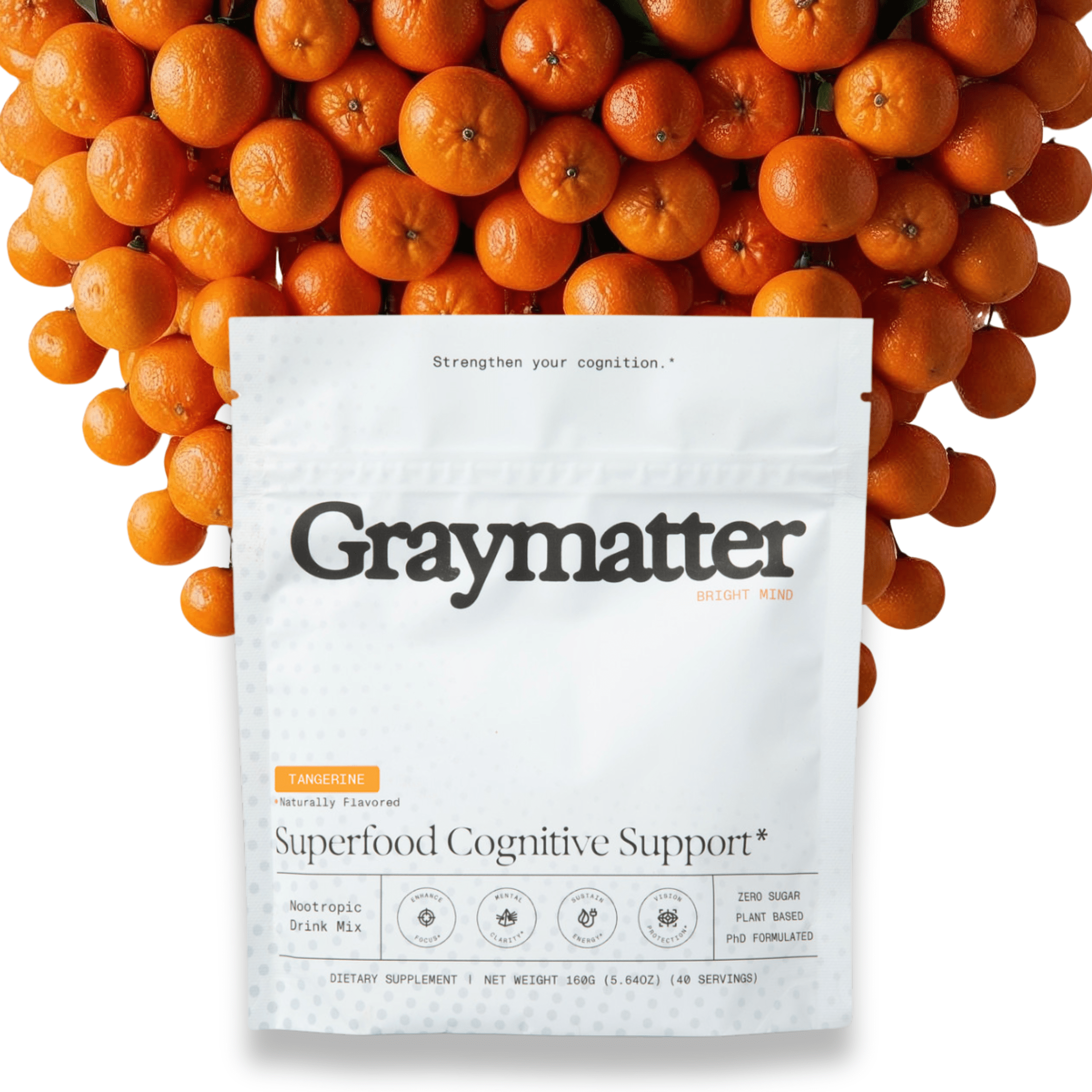
With that base in place, having something consistent alongside it can help keep things on track. Graymatter Bright Mind fits into this kind of routine, used daily to support focus, memory, and mental clarity when sustained attention is needed.
Frequently Asked Questions
How do natural nootropics compare to Adderall and similar medications?
Natural nootropics support the brain’s existing processes rather than forcing stimulation. Their effects are typically smoother and more gradual, with lower risk of dependency, though they may feel less intense initially.
How long does it take to see results from natural nootropics?
Some ingredients may show effects within hours, but most benefits build over time. Consistent use for one to three weeks is usually needed to notice improvements in focus, memory, and mental clarity.
Can I use natural nootropics if I'm currently taking prescription ADHD medication?
Some combinations may be safe, but interactions can vary depending on ingredients and individual health factors. It’s best to consult a healthcare provider before combining nootropics with medications or other supplements.
What should I look for in a quality nootropic supplement?
Look for transparent ingredient lists, research-backed dosages, third-party testing, and well-studied compounds. Avoid proprietary blends that hide quantities, and prioritize formulations designed for daily, consistent use.
Do natural nootropics help with stress-related focus issues?
Yes, certain ingredients support stress regulation, which can indirectly improve focus. By helping maintain balance during demanding situations, they may reduce mental fatigue and improve clarity under pressure.
Compliance note: Graymatter Bright Mind is a dietary supplement that supports focus and cognitive function; not intended to diagnose, treat, or cure any medical condition. Please consult a healthcare provider regarding any treatment plan.
Bibliography
Faraone, S. V., & Wilens, T. E. (2003). "Does stimulant treatment lead to substance use disorders?" Journal of Clinical Psychiatry, 64(Suppl 11), 9-13. https://pubmed.ncbi.nlm.nih.gov/12352269/
Greenhill, L. L., Pliszka, S., & Dulcan, M. K. (2002). "Practice parameter for the use of stimulant medications in the treatment of children, adolescents, and adults." Journal of the American Academy of Child & Adolescent Psychiatry, 41(2), 26S-49S. https://www.ncbi.nlm.nih.gov/books/NBK69423/
Kuriyan, R., et al. (2024). "Novel stimulant formulations in adult ADHD treatment." Journal of the American Academy of Child & Adolescent Psychiatry. https://www.sciencedirect.com/science/article/pii/S0890856724003046
Verlaet, A. A., et al. (2024). "Natural compounds in ADHD treatment: A systematic review." Expert Review of Neurotherapeutics. https://www.tandfonline.com/doi/full/10.1080/14737175.2024.2321921
Faraone, S. V., et al. (2018). "The global coverage of prevalence data for mental disorders in children and adolescents." Epidemiology and Psychiatric Sciences, 27(4), 395-402. https://www.thelancet.com/journals/lanpsy/article/PIIS2215-0366(18)30269-4/fulltext
Mick, E., et al. (2002). "Comparative efficacy of Adderall and methylphenidate in attention-deficit/hyperactivity disorder." Journal of Clinical Psychopharmacology, 22(5), 468-473. https://journals.lww.com/psychopharmacology/fulltext/2002/10000/comparative_efficacy_of_adderall_and.5.aspx
Faraone, S. V., et al. (2022). "The World Federation of ADHD International Consensus Statement: 208 Evidence-based conclusions about the disorder." International Journal of Neuropsychopharmacology, 5(2), 121-157. https://academic.oup.com/ijnp/article-pdf/5/2/121/2029657/5-2-121.pdf
Leave a comment