


Magnesium is involved in over 300 biochemical reactions in the body, and the brain depends on many of them. From nerve signaling to neurotransmitter regulation, magnesium plays a direct role in how well your brain performs on a daily basis.
So when people ask, "Is magnesium good for the brain?" the short answer is: absolutely. But the longer, more useful answer depends on which form of magnesium you choose, because not all forms reach the brain equally.
What Does Magnesium Do for the Brain?
Before comparing specific forms, here’s a quick look at what magnesium actually does for cognitive function.
Magnesium for brain function matters because the mineral supports several processes that directly influence how you think, recall information, and focus:
- Neurotransmitter regulation: Magnesium helps modulate GABA, the neurotransmitter responsible for calming neural activity and supporting restful sleep
- Synaptic plasticity: Adequate magnesium levels may help the brain form and strengthen new connections between neurons, a process essential for learning and memory
- Neuroprotection: Magnesium may help protect neurons from overstimulation that excess glutamate can cause, which damages brain cells over time
- Blood-brain barrier function: Certain forms of magnesium can cross the blood-brain barrier more effectively, directly raising magnesium levels in brain tissue
Magnesium Threonate: The Brain-Specific Form
Magnesium L-threonate is formed when magnesium binds with threonic acid, a metabolite of vitamin C. What sets threonate apart from other forms is its unique ability to cross the blood-brain barrier effectively.
Animal studies have shown that threonate may raise magnesium concentrations in the brain more effectively than other forms, including sulfate and gluconate, at equivalent doses. For magnesium for brain health goals specifically, threonate is currently the standout option.
- Best for: Memory support, mental clarity, learning, age-related cognitive support
- Typical dosage: 1,500 to 2,000 mg of magnesium threonate daily (providing roughly 144 mg of elemental magnesium)
- Drawbacks: More expensive than other forms and lower in elemental magnesium per dose, so supplementing with another form alongside threonate may be necessary to meet overall magnesium needs.
Magnesium Glycinate: The Calming All-Rounder
Magnesium glycinate pairs the mineral with glycine, an amino acid that carries its own calming properties. Glycinate is well absorbed in the digestive tract and tends to cause fewer stomach issues than other forms.
While glycinate does not cross the blood-brain barrier as directly as threonate, the glycine component may support sleep quality, reduce anxiety, and promote relaxation.
- Best for: Sleep quality, stress and anxiety reduction, general magnesium replenishment
- Typical dosage: 200 to 400 mg of elemental magnesium daily
- Drawbacks: Not specifically targeted at brain magnesium levels. Better suited as a whole-body magnesium supplement than a cognitive-specific one.
Magnesium Citrate: The Budget-Friendly Baseline
Magnesium citrate binds magnesium with citric acid, making the supplement one of the most widely available and affordable forms. Citrate is reasonably well absorbed and effective for addressing general magnesium deficiency.
However, citrate does not have a strong track record for cognitive-specific benefits. Higher doses can produce a laxative effect, which limits how much you can comfortably take.
- Best for: Correcting general magnesium deficiency, digestive regularity
- Typical dosage: 200 to 400 mg of elemental magnesium daily
- Drawbacks: Not brain-targeted. May cause digestive discomfort at higher doses.
Head-to-Head: Which Form Wins for Brain Health?
Here’s a quick comparison between Threonate, Glycinate, and Citrate to help you make a better choice:
|
Feature |
Threonate |
Glycinate |
Citrate |
|
Crosses blood-brain barrier |
Yes (most effective) |
Indirectly |
No strong evidence |
|
Best cognitive benefit |
Memory, learning, focus |
Sleep, relaxation |
General deficiency |
|
Bioavailability |
High |
High |
Moderate to high |
|
Digestive tolerance |
Excellent |
Excellent |
May cause loose stools |
|
Cost |
Higher |
Moderate |
Low |
For someone specifically looking for targeted cognitive support, threonate currently has the strongest case. Glycinate is a strong second choice, especially for people whose cognitive performance suffers due to poor sleep or high stress. Citrate works well as a general supplement but falls short for brain-specific goals.
Can You Combine Forms?
Yes, and many people do. A common approach involves taking magnesium threonate during the day for nootropic support and magnesium glycinate in the evening for sleep and relaxation. Combining forms can help address both brain-specific needs and whole-body magnesium requirements without exceeding safe daily limits.
The key is to track total elemental magnesium intake across all sources. Most adults need between 310 and 420 mg of elemental magnesium per day, depending on age and sex. Since threonate delivers less elemental magnesium per dose, pairing the supplement with glycinate or citrate helps close any remaining gap.
Summing Up
Not all magnesium supplements deliver the same benefits. For magnesium for brain health, threonate leads the way with the strongest evidence for crossing the blood-brain barrier and supporting memory and learning. Glycinate is a solid choice for calming the nervous system and improving sleep quality. Citrate works for general supplementation but offers limited cognitive-specific value.
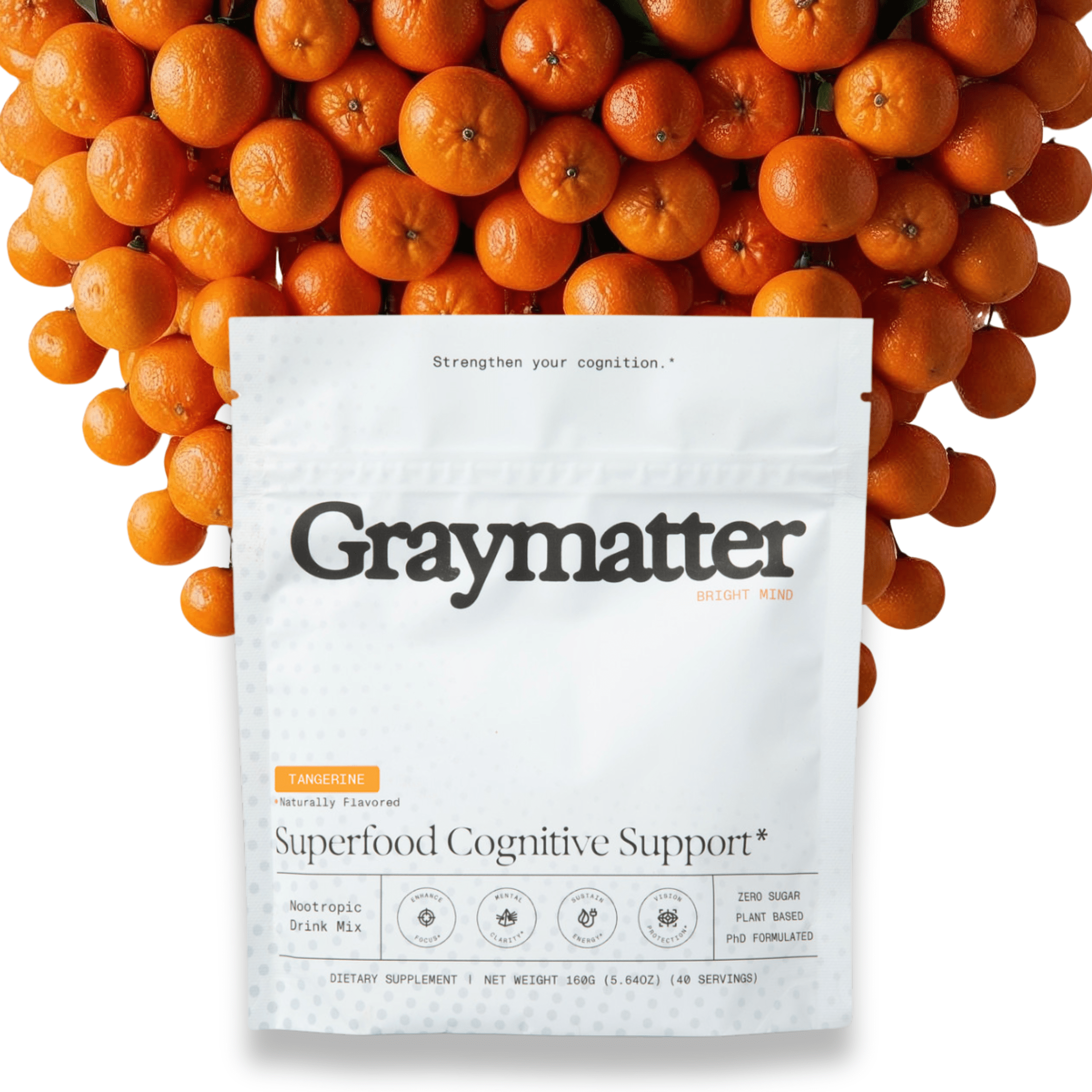
A well-rounded cognitive support routine goes beyond any single mineral. Graymatter Bright Mind combines plant-based nootropics, adaptogens, and energy-supporting ingredients into one daily drink mix, designed to help you stay focused, calm, and mentally sharp throughout the day.
Compliance note: Graymatter Bright Mind is a dietary supplement that supports focus and cognitive function; not intended to diagnose, treat, or cure any medical condition. Please consult a healthcare provider regarding any treatment plan.
FAQs
Which form of magnesium is best for the brain?
Magnesium L-threonate currently has the strongest evidence for brain-specific benefits, primarily because of a unique ability to cross the blood-brain barrier and raise brain magnesium levels.
Is magnesium threonate worth the higher cost?
For people focused on memory, learning, and cognitive performance, threonate may justify the cost. For general magnesium needs, glycinate or citrate can work well at a lower price.
What does magnesium do for cognitive function?
Magnesium supports neurotransmitter regulation, synaptic plasticity, and neuroprotection. Adequate levels may help with memory, focus, mood stability, and sleep quality over time.
How much magnesium should I take for brain health?
General adult recommendations range from 310 to 420 mg of elemental magnesium per day. For threonate specifically, the typical dose is 1,500 to 2,000 mg of the compound daily.
Can magnesium improve memory and focus?
Magnesium threonate in particular may support memory and focus through its ability to raise brain magnesium levels. Other forms offer indirect cognitive benefits through improved sleep and reduced stress.
Is magnesium glycinate good for anxiety and brain fog?
Glycinate may help reduce anxiety through calming effects on the nervous system, and improved sleep quality can indirectly ease brain fog for some individuals over time.
Can you take magnesium threonate and glycinate together?
Yes. Many people take threonate during the day for cognitive support and glycinate at night for sleep. Combining forms is generally safe as long as total intake stays within recommended limits.
Leave a comment